
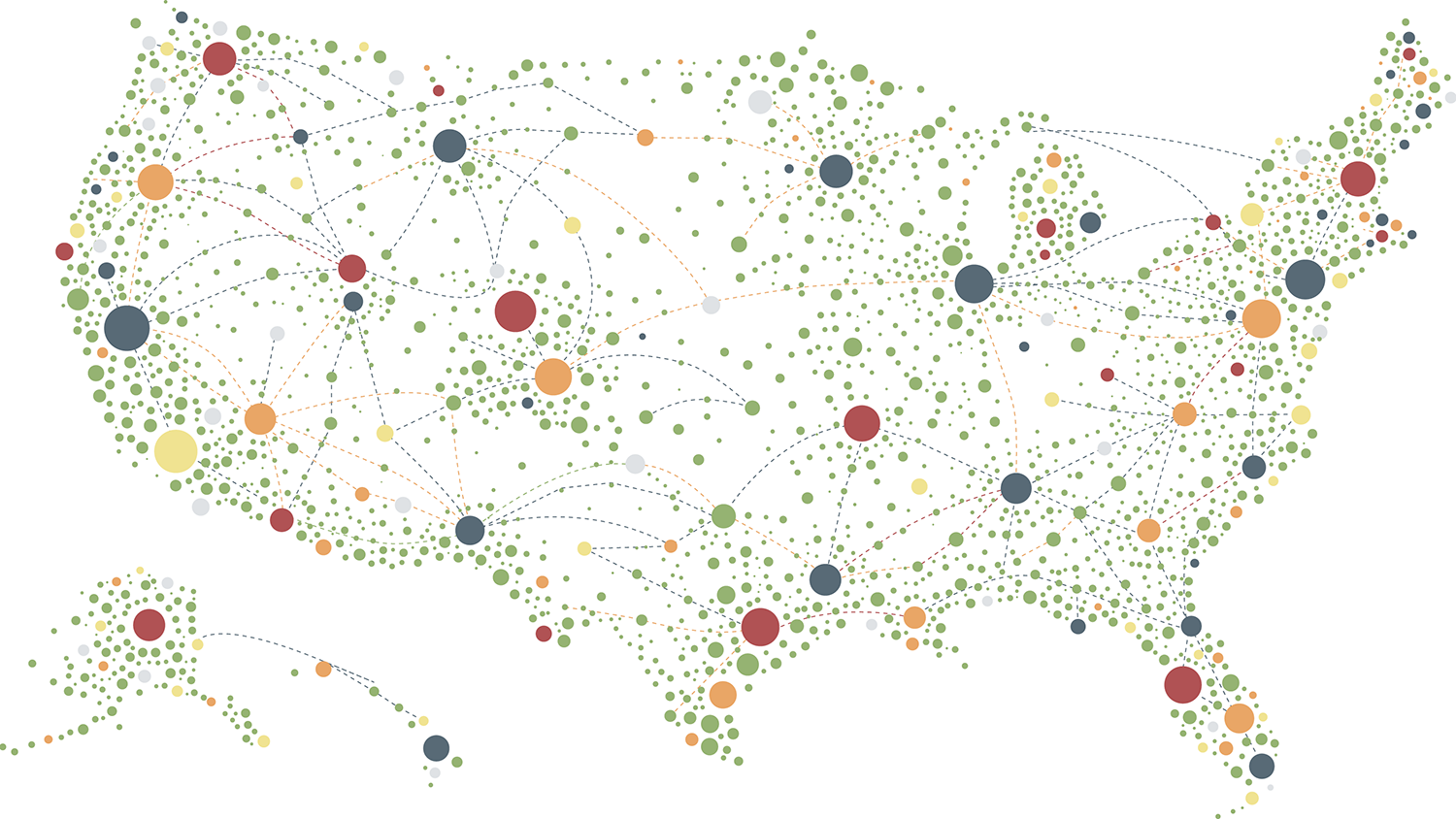
ST. PETERSBURG, Florida (September 8, 2026) — A year after the federal government upended public radio and television stations by defunding public media, a partnership of the Poynter Institute and Public Media Company is launching the Future of Public Media Initiative — a national effort to reimagine a public media system built to serve communities for the next 50 years and beyond.
Poynter and Public Media Company will guide a process based on community needs that leads to a full set of recommendations — focused on renewing public media’s purpose, definition and design principles — during the first quarter of 2027. The initiative will build on groundbreaking research that offers the most comprehensive analysis available of how communities across America want media to serve them.
“We’re living in an era of enormous change, where technology has connected us in new ways, but also has often isolated us from each other and from reliable information,” said Sitara Nieves, Poynter’s vice president of teaching and organizational strategy, who leads the effort for Poynter, a 50-year-old nonprofit that works to strengthen journalism in service to democracy. “At the heart of this work is listening to communities about what’s most needed.”
Leading the work for Public Media Company, whose mission is to cultivate vibrant local media that informs, connects and inspires communities, is CEO Tim Isgitt.
“This is an opportunity to think expansively about a reimagined public media system that can serve the needs of our country and our communities into the future,” Isgitt said. “Our goal is to establish a clear framework for a robust public media system that helps connect communities and provide trusted information and inspiration to all Americans for free.”
The Future of Public Media Initiative will explore the question of what public media needs to become to serve the country for the next 50 years. It will work to define the purpose of public media and what it means to serve the public interest, and propose a definition, structure, funding models and design principles for a reimagined system.
It has been a year since Congress voted to rescind more than $1 billion in future funding for the Corporation for Public Broadcasting. CPB had distributed federal funding to a network of 1,500 public media stations for more than 50 years, providing support for essential news, educational and cultural programming for communities across the United States.
In that time, many local stations have reduced staff and local programming, and many others are concerned about their future. Efforts like a multimillion-dollar Public Media Bridge Fund supported by philanthropic organizations and individuals and overseen by Public Media Company, have helped many stations stabilize and sustain operations.
The Future of Public Media Initiative will engage a wide coalition — of civic leaders, public media station leaders and staff, nonprofit media and concerned citizens — in the creation of a shared framework to answer key questions about public media’s future. They will use this work “to drive a recommendation for where a public media system could go and what it could look like, how it might serve the real needs of communities in this country at scale,” Nieves said.
They start with some working ideas about what is needed, including:
- Public media must be free and driven by local need and community service.
- A future system must be developed to meet a national need for local connection and information.
- A dynamic system of existing community-rooted, nonprofit media organizations should be included in an expanded definition of public media.
The initiative will work with City Square Associates, which has conducted research on the needs, sentiments and opinions of over 100,000 U.S. adults that focuses on surfacing unmet needs around news, music and connection, along with specific needs of rural communities.
Building on that research, the initiative will launch a national survey of public media and local media professionals, then conduct a series of focus groups to review initial recommendations this winter. The partners are targeting the first quarter of 2027 for final recommendations.
The group’s website, futureofpublicmedia.org, will offer regular updates, and those interested can sign up on the site to stay informed about the project.
The initiative has received initial funding from the Arthur Vining Davis Foundations and the John S. and James L. Knight Foundation. Individuals who wish to support the effort can donate through Poynter’s website.
Poynter and Public Media Company bring complementary strengths to this effort, and a deep knowledge of media models, research and practical on-the-ground support.
Poynter is the gold-standard for professional development training of journalists, and has worked extensively with media companies large and small to help improve skills, ethics, editorial strategy, leadership, and business sustainability. Poynter has a longstanding relationship with public media, having worked for years with more than 300 public media stations — including guiding a digital transformation to increase revenue and audience. Public Media Company has worked with over 450 local media organizations in all 50 states, facilitating mergers, acquisitions, operating agreements and content partnerships that have expanded service to millions of people — work that includes launching the Bridge Fund to help at-risk stations navigate the post-CPB landscape. Together, both organizations bring perspective earned across commercial and noncommercial media of every size and structure, and a shared track record of convening across long-standing divisions in the field.
Media Contact
Jennifer Orsi
Vice President, Publishing and Local News Initiatives
Poynter Institute
jorsi@poynter.org
About the Poynter Institute
The Poynter Institute is a global nonprofit working to address society’s most pressing issues by teaching journalists and journalism, covering the media and the complexities facing the industry, convening and community building, improving the capacity and sustainability of news organizations and fostering trust and reliability of information. The Institute is the gold standard in journalistic excellence and dedicated to the preservation and advancement of press freedom in democracies worldwide. Through Poynter, journalists, newsrooms, businesses, big tech corporations and citizens convene to find solutions that promote trust and transparency in news and stoke meaningful public discourse. The world’s top journalists and emerging media leaders rely on the Institute to learn new skills, adopt best practices, better serve audiences, scale operations and improve the quality of the universally shared information ecosystem.
The Newmark Ethics Center, the International Fact-Checking Network (IFCN), MediaWise and PolitiFact are all members of the Poynter organization.
Support for Poynter and our entities upholds the integrity of the free press and the U.S. First Amendment and builds public confidence in journalism and media — an essential for healthy democracies. Learn more at poynter.org.
About Public Media Company
Public Media Company strengthens nonprofit, mission-driven media by providing organizations with the services, support, and insights they need to thrive and make a lasting local impact. Since 2001, Public Media Company has worked with over 450 nonprofit and noncommercial media organizations in all 50 U.S. states, D.C., and Puerto Rico, helping them amplify their service and impact, deepen community connections, and secure long-term business sustainability. In 2025, PMC launched the Public Media Bridge Fund to help vulnerable local organizations and a destabilized system adapt to a post-CPB environment.
Leave a Reply